ZEH FERNANDO
Instagram AR Stickers
Disclaimer: details on this page are restricted to publicly known information. See the list of mentions for sources.
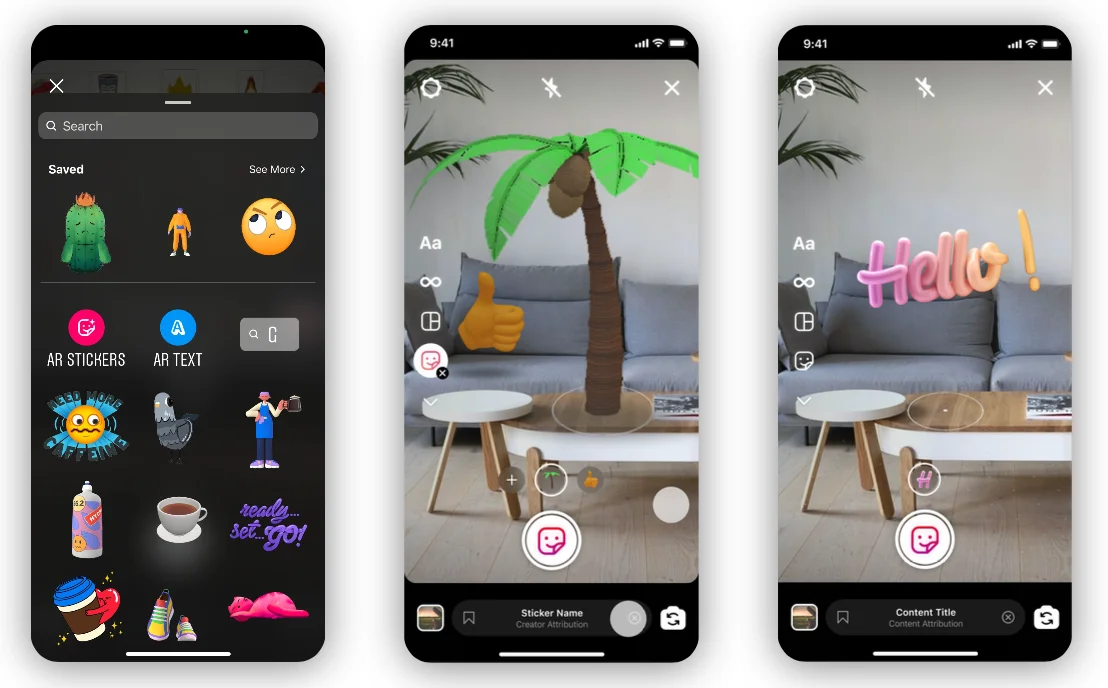
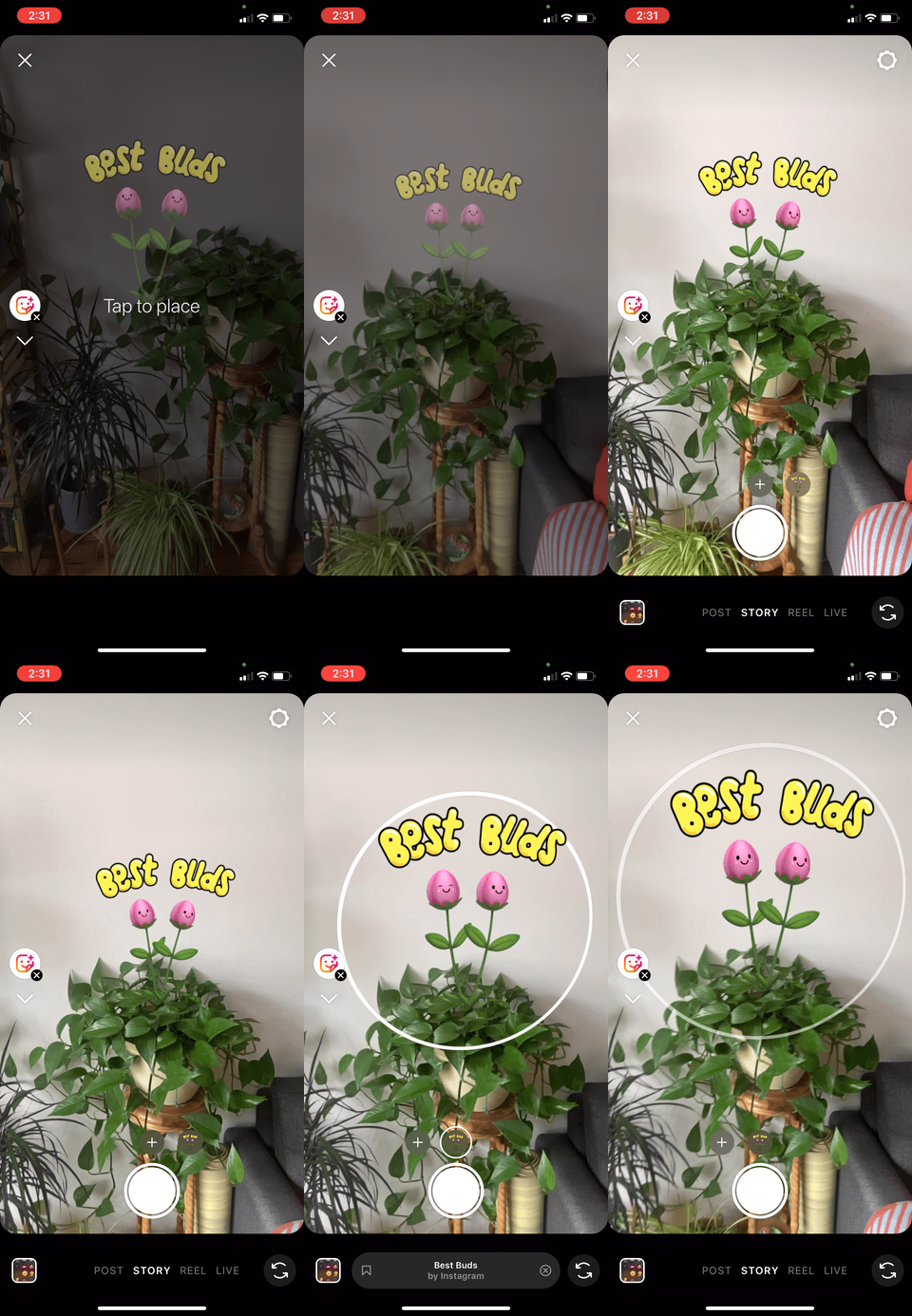
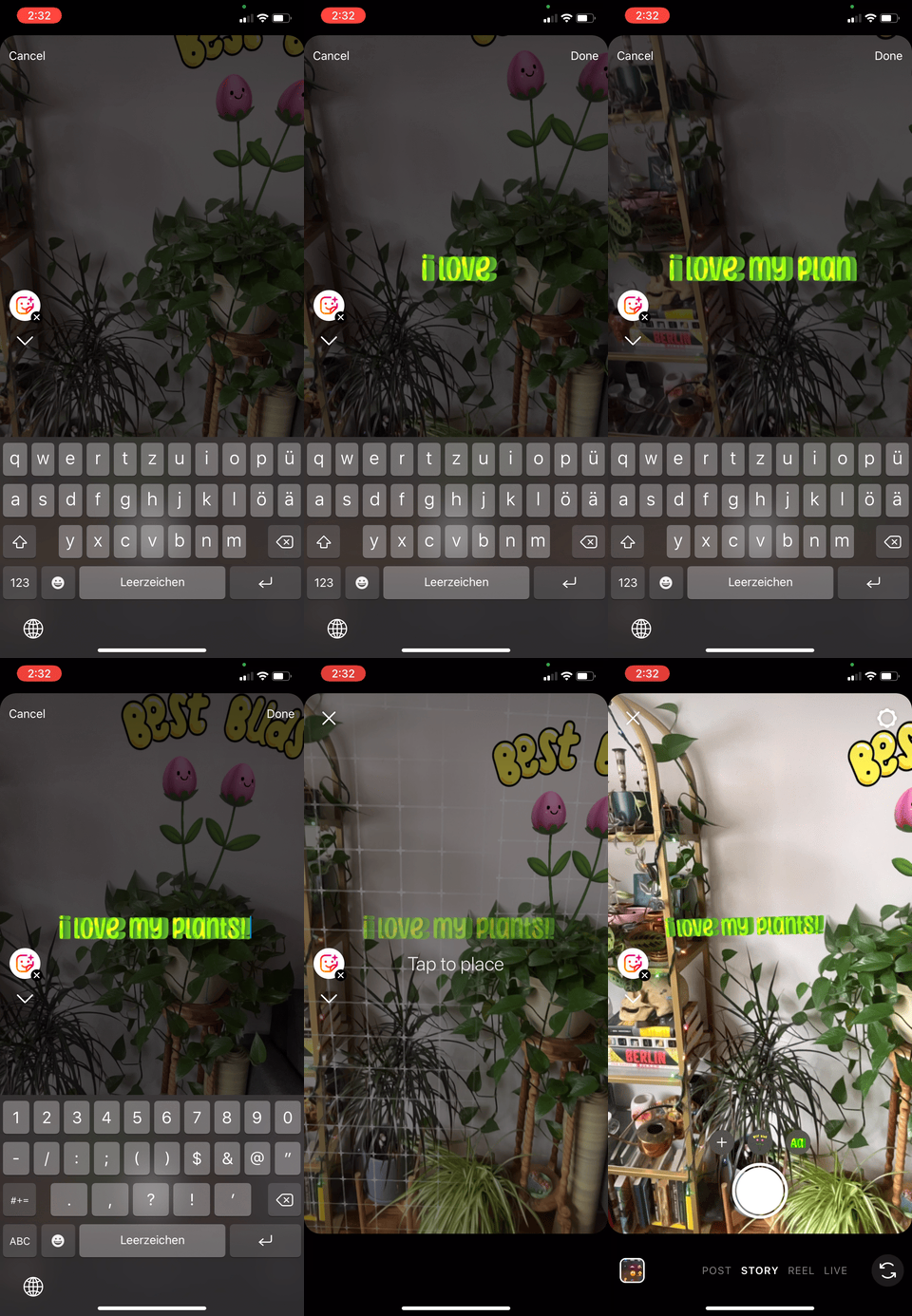
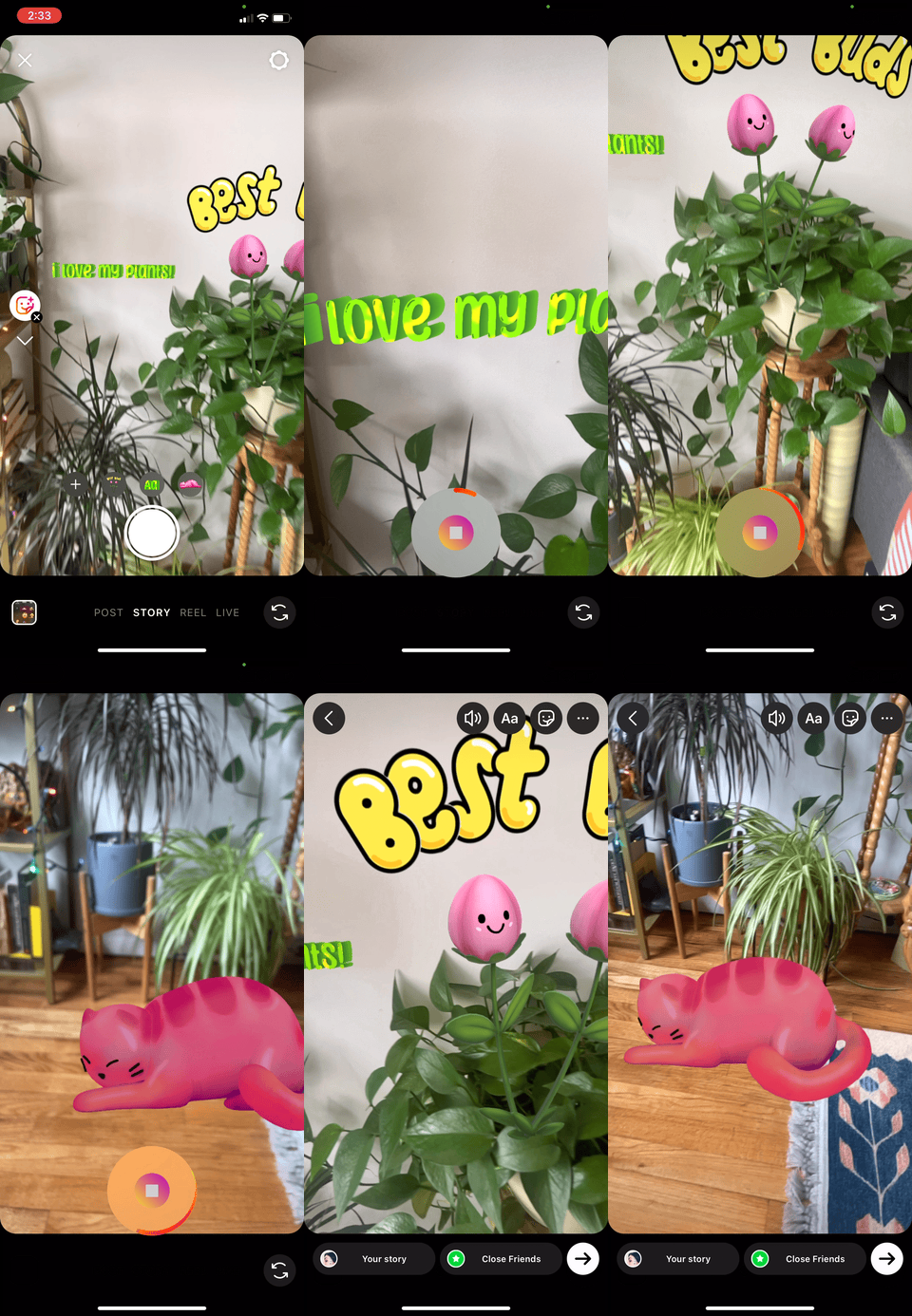
AR Stickers was a new camera mode built directly into Instagram that let people place 3D stickers - virtual objects, text, and effects - around the real world, and then capture and share the result in new Stories. It sat alongside the face “filters” that already existed in the app, and was powered by the same underlying technology (Spark AR).
This was a continuation of Spark AR Scenes, the standalone AR-first camera app I had worked on before. Where Scenes was a separate app you had to download, AR Stickers brought the same core idea - placing persistent virtual content in the world - to the hundreds of millions of people already using Instagram’s camera.
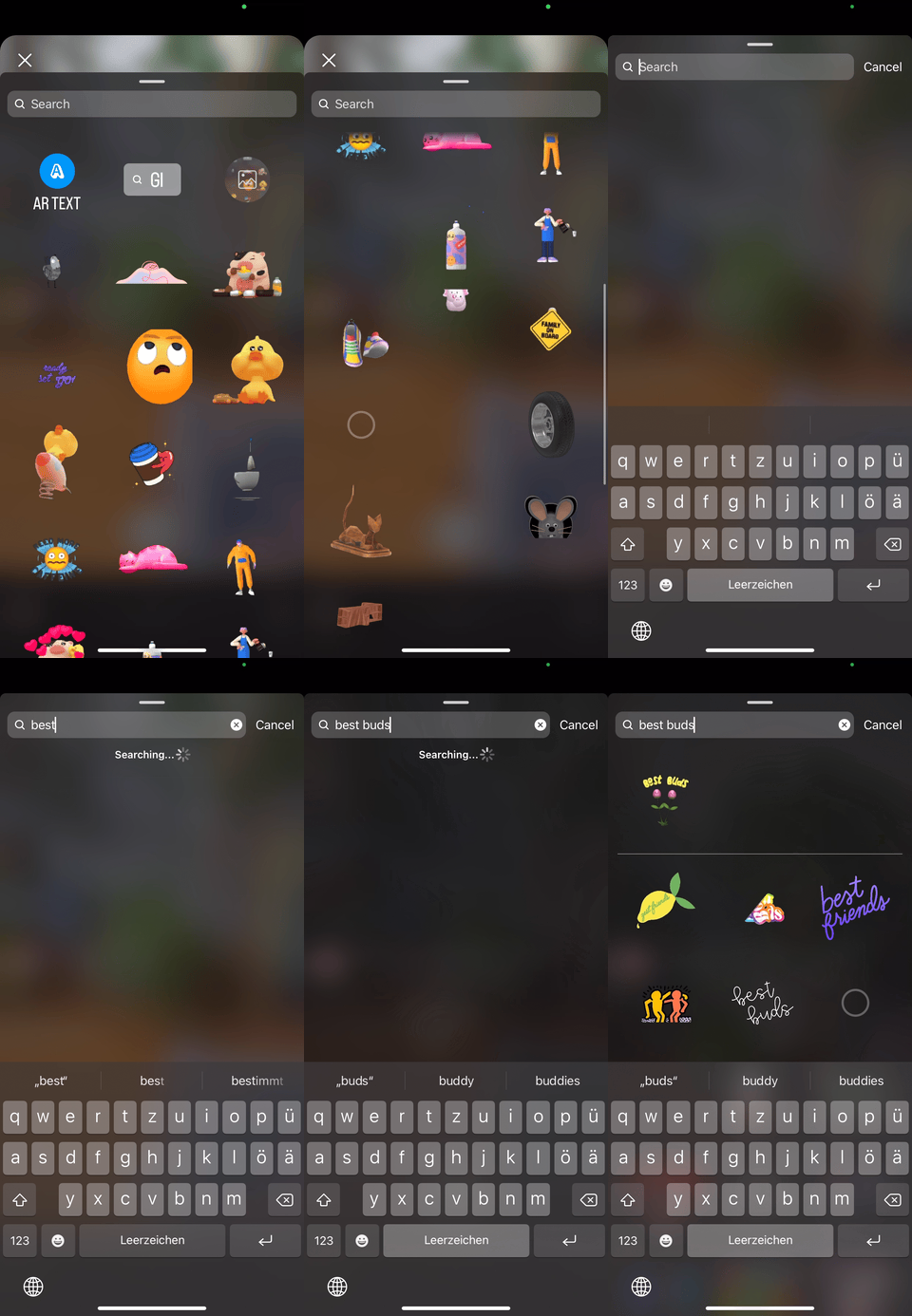
I worked as a developer on the Android version of the feature, building out the end-to-end flow: the in-camera placement tool, the sticker tray and gallery, search, object manipulation, recording, and sharing. A big part of my time went into device capabilities gating (figuring out which phones could run the AR experience well), building the integration between the app and the AR experience surface, and improving overall performance: while we were using underlying world tracking tech already developed at Meta, anchoring virtual content into a real, moving environment and keeping it fast and stable across a huge range of Android hardware took a lot of testing. This work was mostly done on the Android side of things, using Meta’s own libraries and expanding on Instagram’s codebase, but also on the Spark AR layer and even on some tooling capabilities by expanding Spark AR logging into Flipper, Meta’s multi-purpose desktop debugging and logging application.
The iOS version shipped first and reached a public alpha, and the Android version launched shortly after. Ultimately, though, the product was wound down as well; AR was deprioritized for the product, and the feature was effectively canceled right around the time the Android version reached the public. Even so, it was a great problem space to work in, and the team’s AR experience carried forward into later augmented reality work.
Details
Date
June 2022
Company
Brand
Type
Mobile App
Platform
Android
Programming Languages
Java, Kotlin, TypeScript
Role
Developer (Android)
Previews
Mentions
Instagram's Testing AR Elements Within Stories, and its New NFT Display Feature
(Social Media Today)
Additional Credits
Product Management
Virginia Maloney
Product Management (Virtual Objects Platform)
Tom Bender
Engineering Manager
Boris Rabinovich
Designer
Julien Wormser
Designer
Alice Rhim
Designer
Data Scientist
Daston Arman
Data Scientist
Jill Zhang
Developer (iOS)
Artemiy Galkin
Developer (Android)
Brian Burgess
Developer
Ivan Zaitsev
Developer
Roben Kleene
Developer
Mariano Arobes
Developer
Manuel Camacho
Developer
Joseph Lee
Developer
Oleg Gordynchuk
Developer
Lionel Reyero
Technical Artist
Myles Al Yafei
Developer (World Tracking)
Jiawen Zhang
Developer (World Tracking)
Miaojun Yao